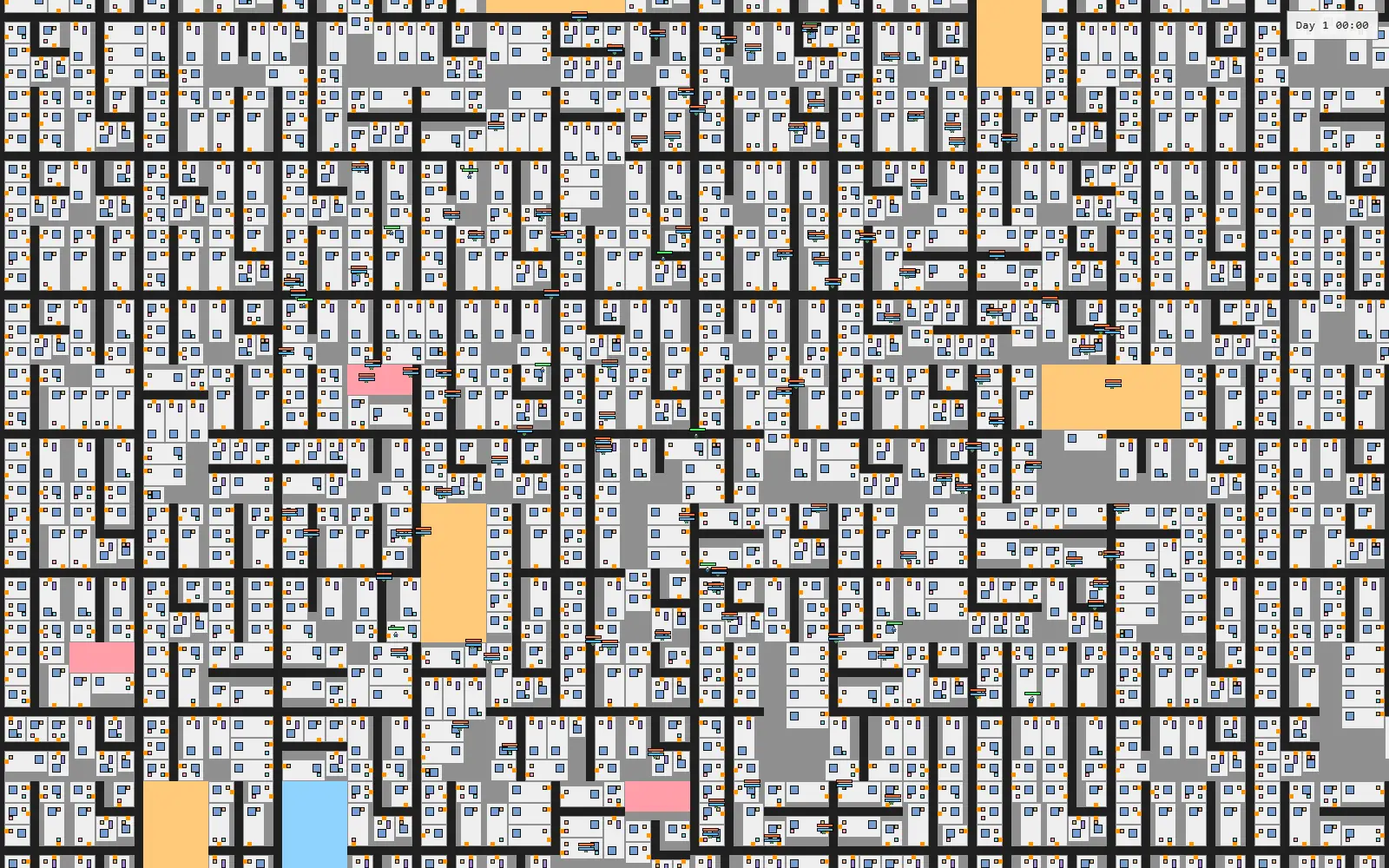
Colony survival gameSince Mar 2026Prototype
Un-Dead Hotel
Colony survival inside Hilbert’s: an infinitely generated hotel overrun by zombies. A 2D browser prototype, now being rebuilt in Unity 3D.
JavaScript / Unity / C#
Work
What happens to inequality when you change the rules?
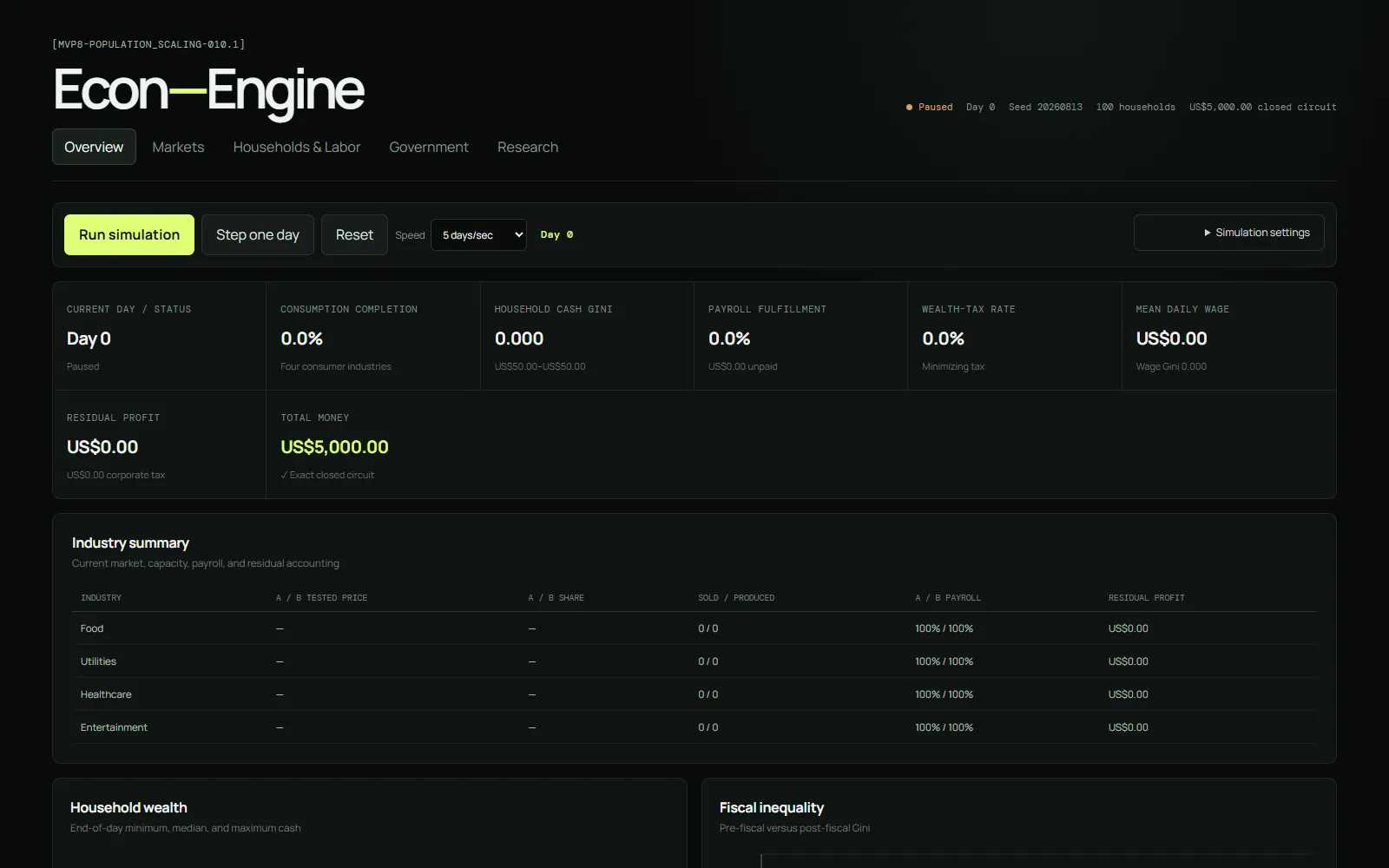
A deterministic agent-based economy in the browser, built so that every outcome can be traced to a cause.
Households, competitive firms, a transport monopoly and a government interact in fixed daily phases. Money is conserved exactly in integer cents; the government can only tax and redistribute, never borrow or print. Each MVP adds one mechanism, with a changelog for the software and lab notes for the reasoning.
Lineage
Can a machine learn to play a world, and can a world be modelled well enough to play?
A research environment for training and benchmarking reinforcement-learning agents on The Battle of Polytopia.
A Java implementation of the game is driven from Python through Py4J and exposed as a Gymnasium environment. Agents are trained with a legality-aware PPO adapted from CleanRL, on genuine map data, with a frozen train/validation/test split, paired baselines and first-attempt human benchmarks. The current curriculum isolates early-game economy before expanding toward full play.
Began from ClaireBookworm/polytopia_rl and has since been substantially extended.
Lineage
Also on this line
Colony survival inside Hilbert’s: an infinitely generated hotel overrun by zombies. A 2D browser prototype, now being rebuilt in Unity 3D.
JavaScript / Unity / C#
Atlas Core
May 2026 · ActiveA province-level model of the world on 1 January 2025, assembled from public datasets as a foundation for strategy games and simulations.
Project Republica
Mar 2026 · PrototypeA country-management game set in Portugal.
Project Galáctica
Mar 2026 · PrototypeA hard sci-fi grand-strategy design: real astrophysics, wormhole logistics and delayed communication across ten light-years.
How much behaviour can emerge from simple local rules?
Autonomous humans in a 3D world who perceive, remember, get hungry, get cold, and build shelter to survive.
Each agent runs a priority-based behaviour tree over modelled physiology: sleep pressure from adenosine, hunger from ghrelin, and thermal comfort from sun, shade and fire. Agents fell trees, split logs, craft tools and raise structures from staged blueprints with strict resource conservation.
Lineage
Also on this line
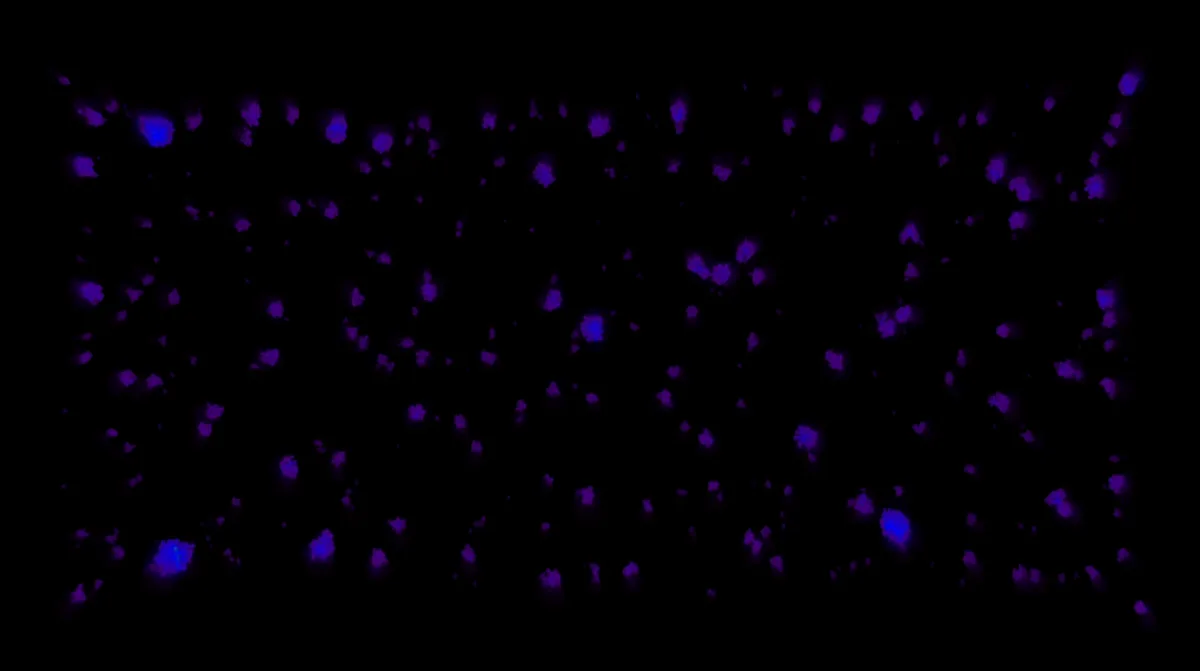
A 2D astrophysical simulator with Barnes–Hut gravity, inelastic collisions and thermodynamics, producing orbits, accretion discs and stellar explosions.
Python / NumPy / Numba / Pygame
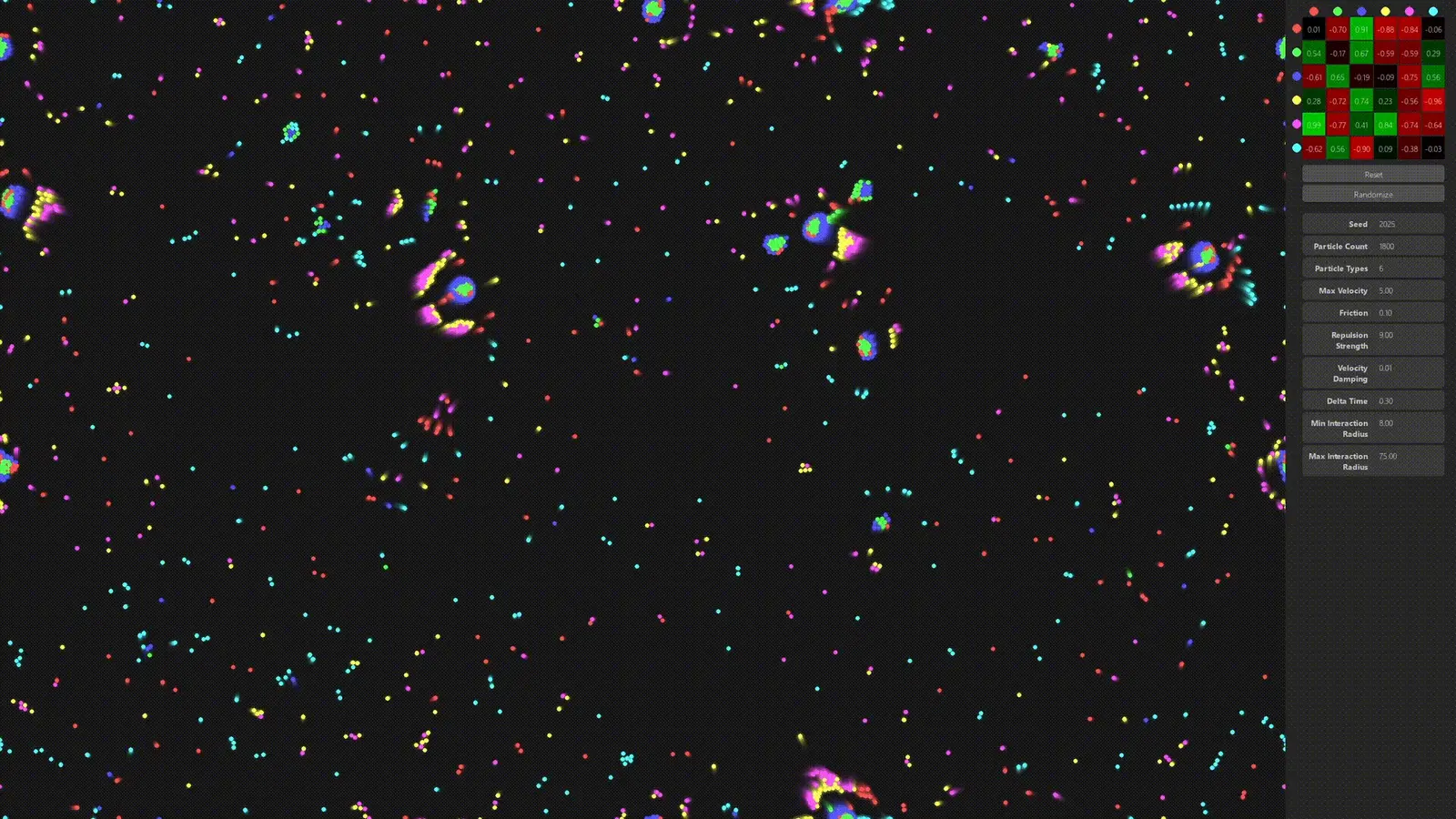
Six particle types, one attraction matrix, and life-like structures that nobody programmed. JIT-compiled with Numba.
Python / NumPy / Numba / Pygame
Life Sim
Jan 2026 · ArchivedAn earlier artificial-life simulation in Python. 102 commits.
Life Engine
Aug 2025 · ArchivedAn early experiment in agent physiology.
Modular World Generator
Aug 2025 · CompleteA Python library and design tool that generates self-contained, scientifically grounded worlds for other simulations.
Ant Colony Genetic Simulation
Jul 2025 · CompleteAn ant colony that evolves under natural selection, the project that restarted serious programming in 2025.
Ecosystem Evolution
Jul 2025 · ArchivedAn ecosystem simulation centred on realistic plant life. 127 commits.
What if a life were run on evidence rather than impressions?
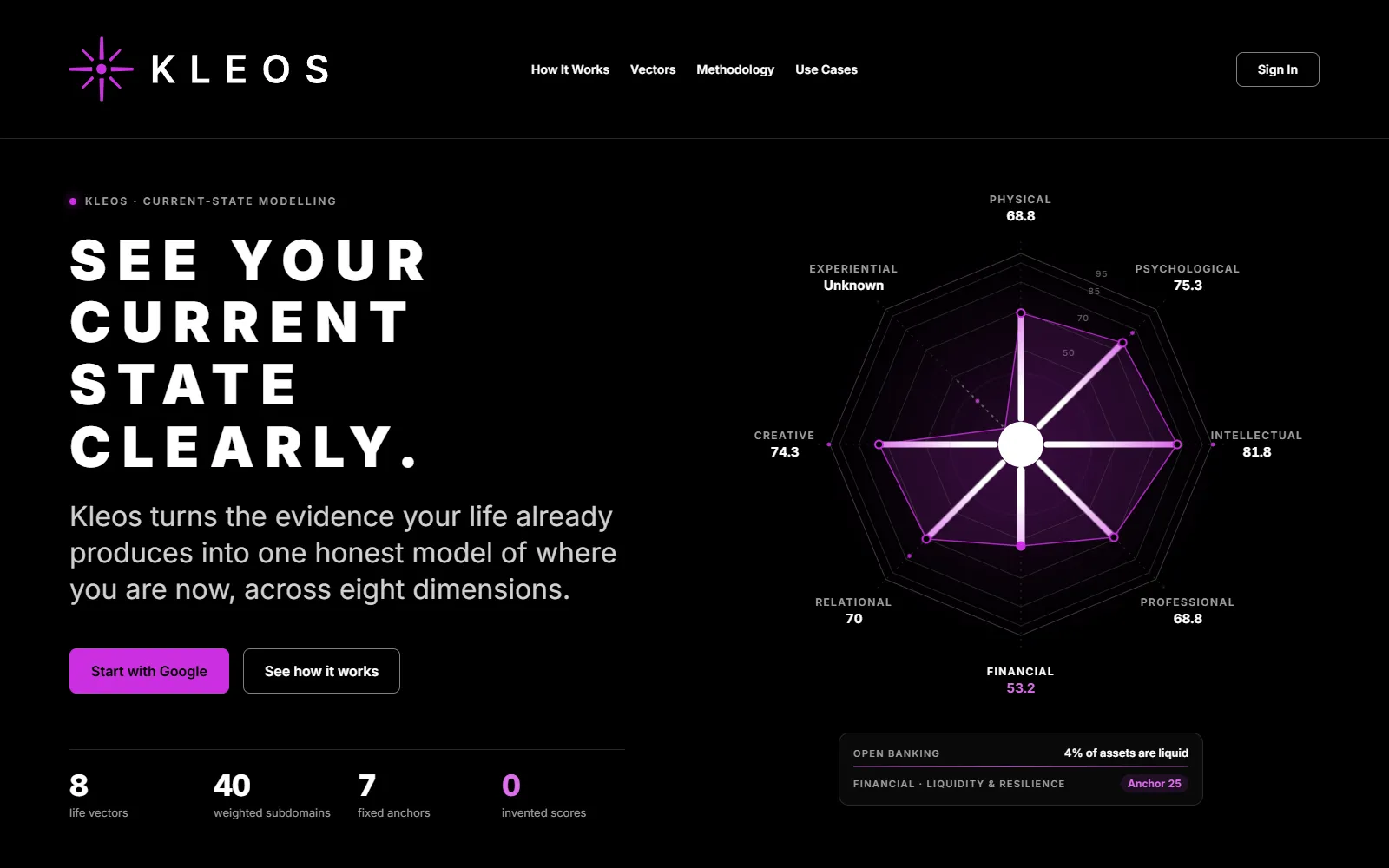
An evidence-based model of a whole life across eight vectors, stored as auditable, dated snapshots with explicit coverage and confidence.
Also on this line
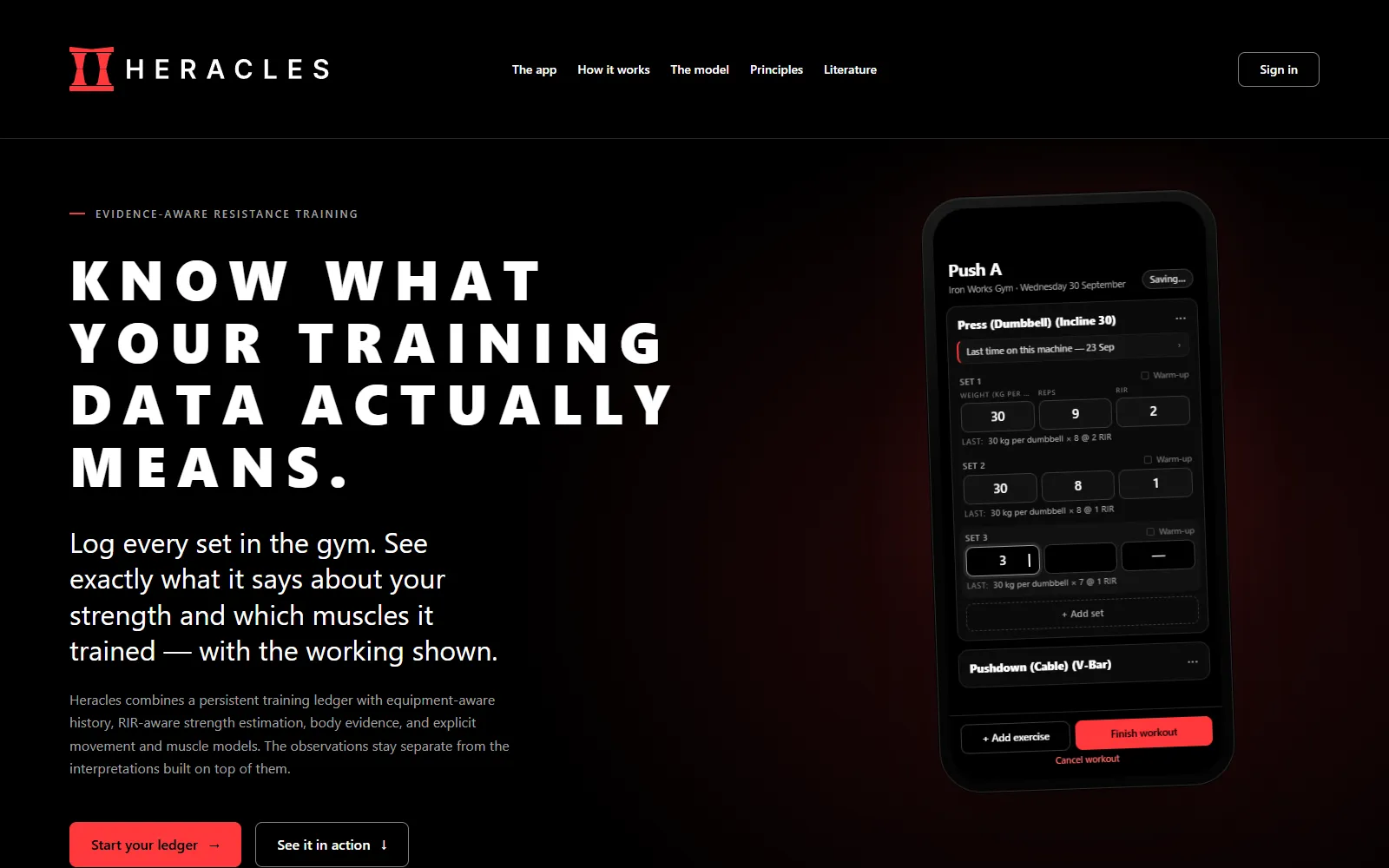
An evidence-aware strength-training app: logs every set and shows what it says about strength and which muscles it trained, with the working shown.
JavaScript / Supabase / PostgreSQL / PWA
A personal strategy system linking long-term direction to today’s tasks, with an AI assistant that reprioritises by strategic relevance.
React / Next.js / Supabase / PWA
§ 01Index
§ 02Engineering ledger
Authored commits
Repositories
Contributions, past year
Background
How I got here
I learned Python for my IGCSEs and JavaScript in IB Computer Science at Higher Level, and took a summer course in machine learning and deep neural networks at Imperial College London in 2018.
For years my programming came in waves: game prototypes, and a website for my political streaming community. Large language models changed how fast I could iterate. In March 2025 I returned seriously with an ant-colony simulation, and have not stopped since: particle systems, ecosystems, agent-based economies, a reinforcement-learning environment, and the software I use to run my own life.